Category Archives for News & Media
Congratulations Farzana
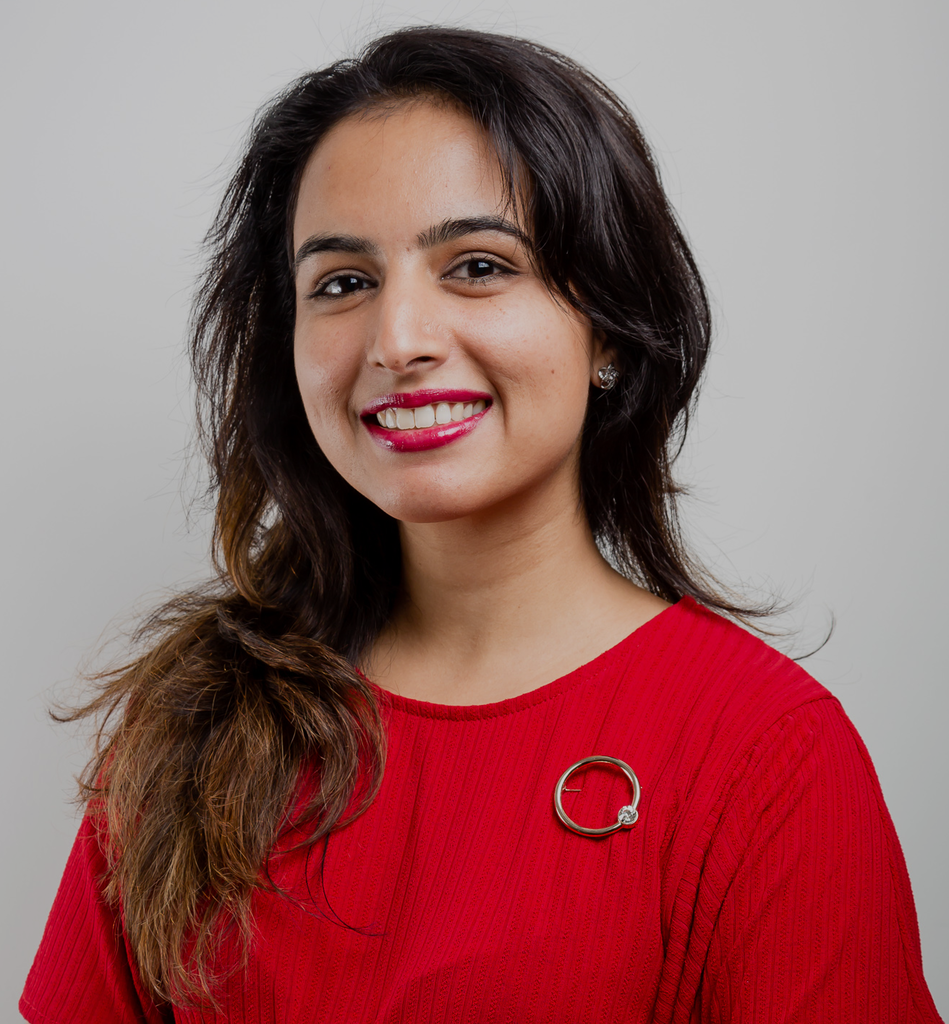
Wise Professional Network (WPN), along with the Board of Subsea Energy Australia, are excited to announce Farzana Khambatta is taking on the leadership position of the group. WPN was formed in 2016 with the aim of contributing to achieving gender parity in the subsea and ocean based industry.
Farzana is a Process Engineer (specialising in flow assurance) with 12+ years experience in the oil and gas industry. She holds a double degree in Chemical Engineering and Finance, and has worked on a multitude of projects in both local design offices, and on site in construction and commissioning roles. She is currently working at Intecsea / Worley with prior roles at Chevron, Genesis Oil & Gas, Granherne, amongst others. Farzana joined WISE mid 2019 as a committee member, and was spearheading the “Get Wiser” sessions during 2020. Farzana has also recently picked up co-chair of WoW (Women of Worley) and is passionate about helping others reach their potential.
Join us in congratulating Farzana on this important role.
Get Wiser Oct 2020: Climate Change with Lana Dzananovic
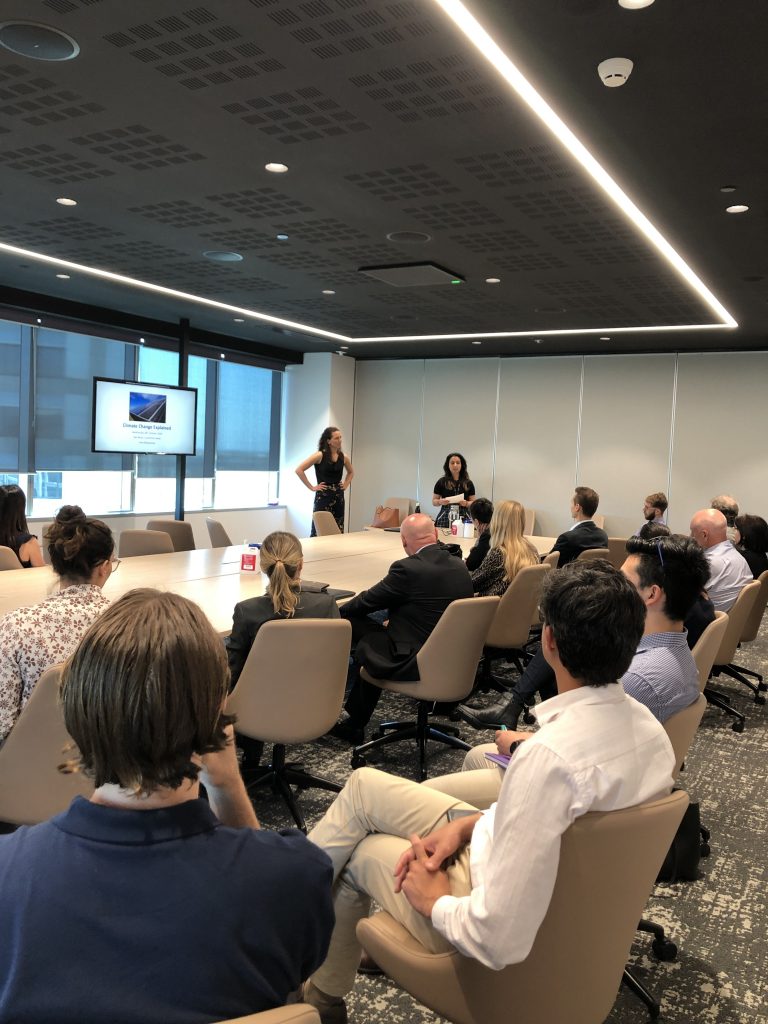
In the October Get Wiser presentation, Lana Dzananovic broke down the science of climate change for attendees. Discussing everything from how the climate changed before humans existed, why it’s so different now, and why we must act urgently. Lana has worked at Worley for eight years as a mechanical engineer, project engineer, and is currently the Energy Manager in Worley’s sustainability team. Her passion for sustainability lead to an engaging discussion focused on the science and ramifications of climate change.
Lana began the presentation by first explaining that before humans existed, the environment had already seen several changes due to natural phenomenon. This being the Milankovitch cycles. What are they you might ask? Well as Lana explained they are cycles that affect the amount of sunlight that Earth absorbs from the sun. However, these cycles are not to blame for our current climate crisis because Milankovitch cycles operate on long time scales. They range from tens of thousands to hundreds of thousands of years. Earth is currently in an interglacial period. If there were no human influences on climate, the Milankovitch cycles say we should be getting cooler.
So what is to blame?
Well according to Lana it is a variety of factors, the main one, unsurprisingly being humans. We can see the effects of human evolution throughout the natural landscape, an example of this lies in ice cores. In the most remote regions of the world, these cores of ice contain CO2 bands, each band indicating CO2 levels in the atmosphere. Unsurprisingly the level of CO2 in these cores rises at an alarming rate from the period of the industrial revolution. With the Industrial Revolution came the burning of fossil fuels, the emission of greenhouse gasses, and alarmingly deforestation which leads to the Earth absorbing less carbon. Ultimately this has led to the Earth’s temperature rising by 1°C since the beginning of the Industrial Revolution. This rise in temperature may seem small, but the effects of climate change directly lead to heatwaves, droughts, heavy rainfall/floods which negatively impact humans and animals instantly. Longer-term negative effects lie in our ocean due to it absorbing much of this increased heat leading to, ocean acidification, thinner shells for shellfish, coral bleaching & mass coral death, increased migration of marine species, disrupting ecosystems.
So, what can we do?
As we need to limit global warming to 1.5°C before it’s too late to turn back. We can achieve this by decarbonising our energy system, grow our food sustainably (or use our purchasing power to support sustainable agriculture), decarbonise the industrial sector and decarbonise our transportation. The changes can start small, it doesn’t have to be perfect, but they need to be made for our future.
Get Wiser Sep 2020: Emotional Intelligence with Ali Local

Our first Get Wiser held since COVID-19 hit was a great success.
Presented by Ali Local, this presentation covered emotional intelligence and its growing importance in the workplace. Key topics of discussion included the four areas that make up emotional intelligence and how you can improve your emotional intelligence to ensure you remain competitive in the job market. As well as the many varied ways in which emotional intelligence can be measured professionally and personally.
With emotional intelligence being recognised by the World Economic Forum in the Future of Jobs Report as a valuable skill that has seen an outsized increase in demand relative to its current prominence. Ali went on to explain the role that emotional intelligence plays as an indicator of leadership capability. The session also challenged attendees’ perceptions as they were asked to identify how many universal basic emotions we can identify, with only one person in the room guessing correctly at eight. Ali also talked through the importance of skilful versus unskilful perception of other people’s emotions, prompting attendees to critically analyse how they would respond in certain situations.
Filled with thought-provoking discussion, interactive quizzes, and plenty of tools added to the emotional toolkit, the first Get Wiser event of the financial year was a great success. Ali broke down emotional intelligence and its importance for both teams and individuals, and the WISE committee pulled together a successful morning. The next Get Wiser lunch will take place on Wednesday, October 28th with guest speaker Lana Dzananovic for a technical session.
Get Wiser Feb 2020: Hyperbaric Welding of CRA Clad/Lined Pipelines
We had our first Get Wiser event of the year kicking off with a well-attended technical presentation from Sophie Yin on hyperbaric welding of CRA clad/lined pipelines. She showed us the journey of Woodside Energy‘s hyperbaric welding trials on CRA pipe coupons and the unique challenges that this brings compared to the more established hyperbaric welding of carbon steel pipe. Some considerations include gas composition within the hyperbaric habitat and the need for additional equipment within a congested space. Sophie’s work showed that this pipeline repair technique is feasible and forms important groundwork for future qualification.
Thanks Sophie!
Venue kindly provided by Wood.
Get WISER November: Challenging the Status Quo
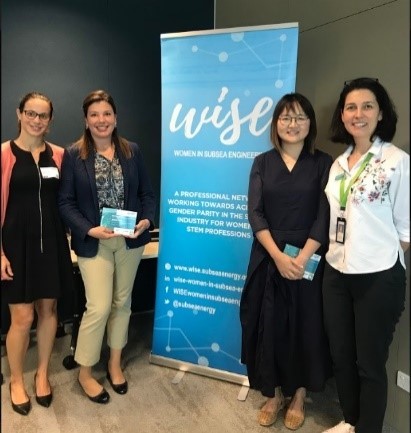
Spool Connection Assembly (SCA)
Wenwen Shen presented on an Innovative Spool Connection Assembly concept, introducing the opportunity to avoid long single spools, and thereby minimising risks and cost associated with heavy lifts. A couple of concepts were considered, including pre-installed foundation with subsequent tie in, as well as integrated foundation with subsequent laydown. In the shallow water case study presented, the former option was adopted as it offered more stability and higher reliability in the wave dominated loading environment. Various guide options were also considered to facilitate tie-in operation as well as to optimise the interface loads at the connection structure. A good understanding of the relevant industry codes and standards allowed to adjust and relax the stability design requirements of low consequence foundation structures which serve as installation aids for this particular project application.
Subsea Equipment Australian Reliability (SEAR) Joint Industry Project (JIP)
Adriana Botto gave an overview and update of the ongoing SEAR JIP. Adriana highlighted the challenges associated with subsea equipment that is failing prematurely in Australia waters that sparked the JIP initiative in 2014. Now delivering phase 6, the JIP primarily focused on marine fouling intervention and umbilical challenges. SCMs and EFLs were presented as some of the equipment most prone to failure, most often significantly earlier than their intended design life. Living laboratories in the form of material samples attached to subsea structures have been deployed to identify game changing technologies that will enable better performing material options. Next, the focus will be on umbilicals and the issues associated with unwanted gas in umbilicals, which is exacerbated in the warm waters in Northern Australian. The long-term effects of gas presence on performance is poorly understood and will be investigated by the JIP. Results of the SEAR JIP will be communicated through an industry best practice guideline intended to reduce operating cost for existing and future projects, while identifying solutions that are uniquely suited to Australian Waters.
Get Wiser October: Be Your Own Ally – Self Care and Emotional Resilience
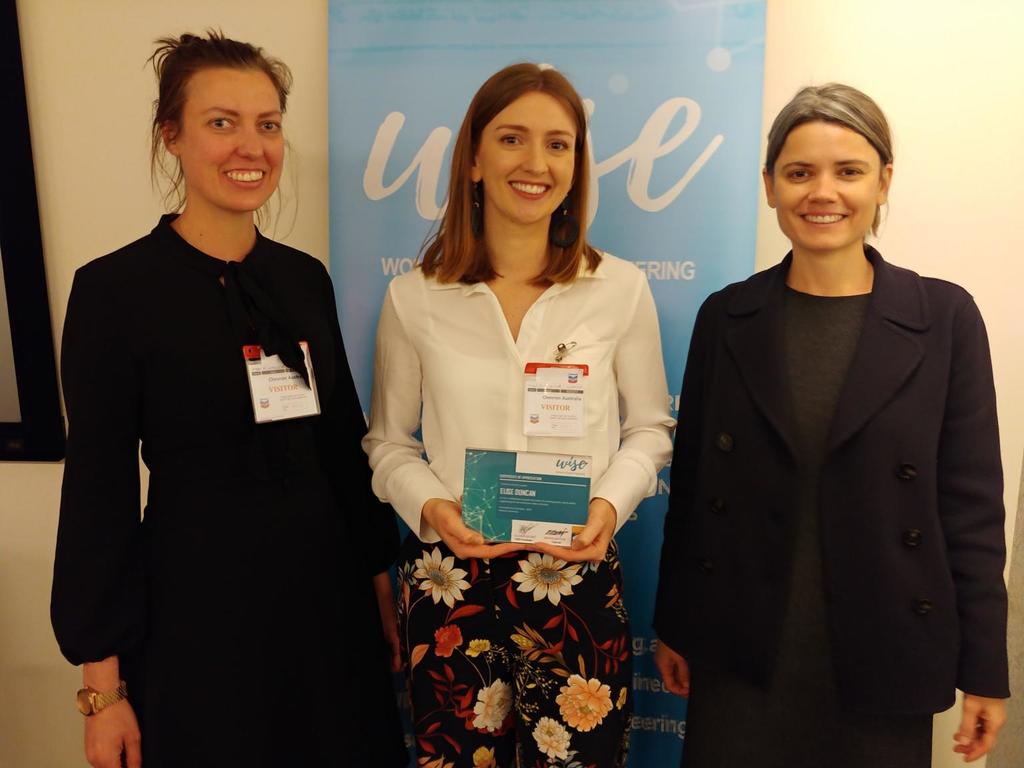
“How to be your own ally: Self-care and emotional resilience” was the topic of discussion in the October Get Wiser by Elise Duncan, a Clinical Psychologist and hosted by Chevron Australia.
Elise said that mental health issues often arise from pushing too hard for too long or having unrealistic expectations of oneself. She talked about the different information processed in three levels of the brain (Thinking Brain, Emotion Brain and Survival Brain) and what happens when we become tressed. She highlighted the importance of recognising whether ones nervous system activation is too high (hyper-arousal), too low (hypo- arousal) or in the optimal zone (Window of tolerance).
Even when not under threat, our minds wander to negative thoughts because of the brain’s Default Mode Network which focuses on the negative as a means of protection. We build expectations based on past experiences. Although these “Mental shortcuts” save energy, they can be unhelpful if left unchecked.
Including frequent mindful breaks in your day, consciously taking in the good, and bringing conscious awareness to things you do on autopilot can help tame the mind. Understanding the mind and body are not out to get you can help you decide when to be guided by their signals and when to just let them pass.
Get WISER September: Flow Assurance Revealed by Jeannie Wong (Woodside)
Another full-house and successful Get WISER Tech was held in September. Jeannie Wong from Woodside gave us a very comprehensive overview of the flow assurance world.
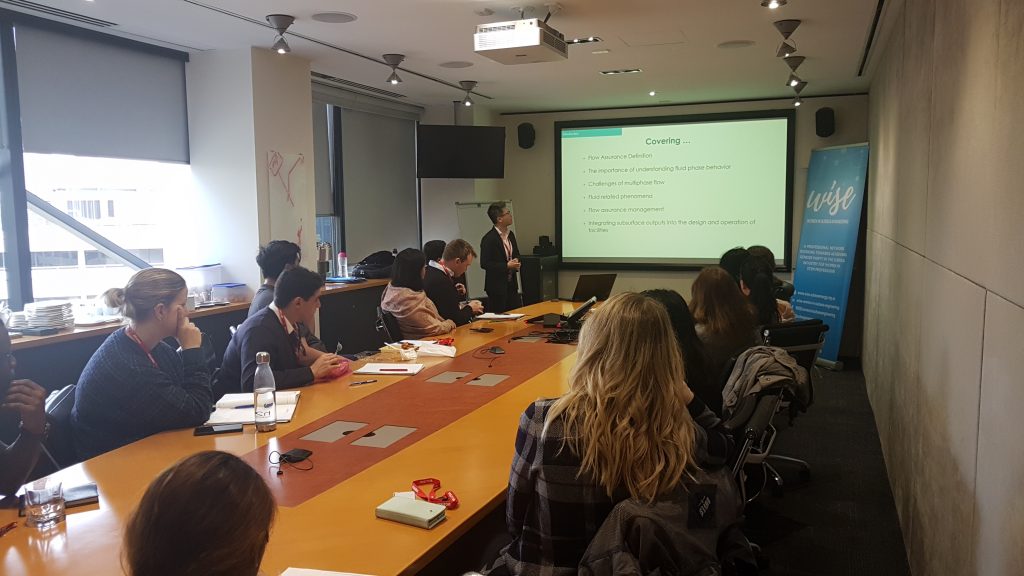
Jeannie covered the asset’s life from design to operation, and showed the importance of flow assurance considerations throughout the life of the field.
Many interesting topics were addressed including line sizing considerations, the importance of using detailed bathymetry data and the transient nature of multiphase flow, just to name a few.She also pointed out the various strategies (avoid, manage, ignore) to deal with wax, scale and hydrate formation.
The number of questions at the end of the presentation showed the level of engagement and interest from the attendees, a true testimony of the quality of this session.
Get Wiser July: Subsea Installation Awareness
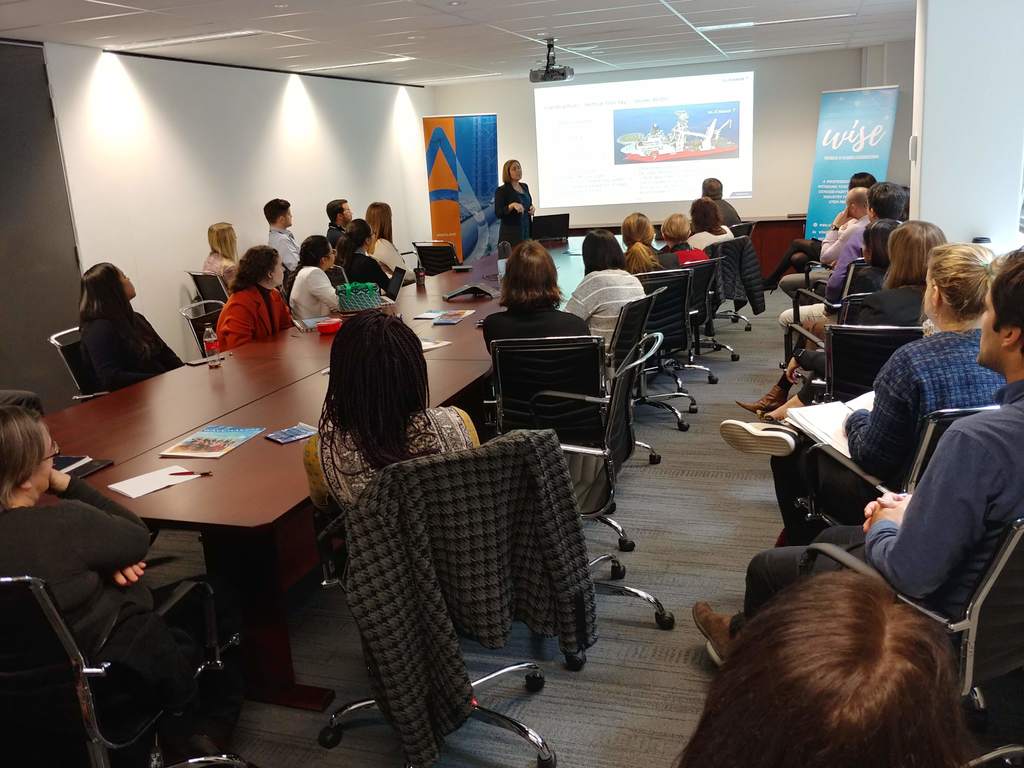
This month’s SOLD OUT Technical ‘Get Wiser’ was held in the new Atteris office. Gillian Stone, a Project Engineering Manager at Subsea 7, provided the audience with a highly informative overview of the HUGE topic of Subsea Installation which was quite a challenge in under an hour!
Gillian challenged the designers in the room to think about the actual installation requirements and conditions faced offshore when at the design stage and how, by considering these issues, could assist the installation process to go much smoother. Typical issues to consider: – Structure weights required for the cranes and lifting requirements – Tag lines – there are often not designed into the structure but really important for ensuring safe over boarding – How the equipment is laid out on a deck and what connections are to be made onshore first for practicality and efficiency – Unclear design requirements can cause ‘assumptions’ to be made by and can result in a design fail and add $$$ to the cost of installation.
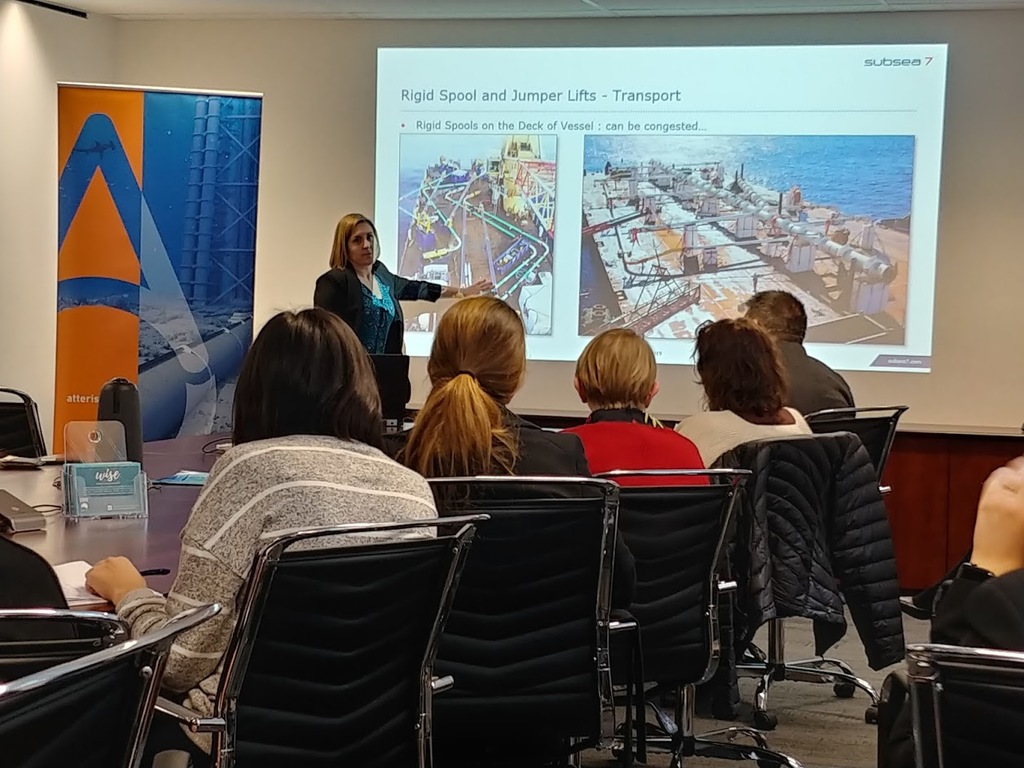
The session was very interactive with lots of questions being asked which was great to see and was also great to see an almost 50/50 female/male ratio, although from the photos you can’t see this as most of the men were hiding at the back of the room! This event was a sell out so make sure you get in early for next month’s Get Wiser session which will be a Professional Development held on the 21st August. Further details to follow soon!
Sign up to the WISE newsletter so you don’t miss out on the next events.
Girls Shine in our Future Engineers Program
The second week of the Western Australian September school holidays saw 30 lucky girls take part in the inaugural Future Engineers program. Organised by WISE (Women in Subsea Engineering) the program ran over the course of five days and included an absolute treasure trove of experiences for the girls.
Through the support of partners, sponsors and volunteers, the girls spent time at numerous facilities and had visiting experts who gave them a wealth of knowledge and inspired them to consider careers in a STEM field. The information the girls received didn’t stop at technical career based advice. They also spent time developing their public speaking skills, their confidence through body language and their ability to succeed and thrive in what is traditionally a male dominated industry. Of particular value and inspiration was the number of female volunteers generously giving up their time to demonstrate and encourage the next generation of women into oil and gas careers.
The program culminated with an awards and presentation evening on the Friday. All of the girls presented on what they had learned during the week, with much insight, creativity and humour. The expressions on the participant’s faces was electric and their energy for the sector was tangible.
Feedback from the participants, their parents and professionals involved with the program has been outstanding and we hope to run an even bigger program next year. WISE are seeking expressions of interest for program supporters for the 2019 program. If you can help out, please get in touch via our website here.
WISE would like to thank the following people and companies, without whom the program couldn’t have been such a success;
Major Sponsors: WISE, Subsea Energy Australia, BHP and Engineers Australia
Program Partners: Petroleum Club of Western Australia, Scitech, Greenlight Environmental, Atteris, CSA Oceans, NEXXIS, TechnipFMC, BHP, Schlumberger, Indian Ocean Marine Research Centre (IOMRC), NGI, Genesis, Pressure Dynamics, IFAP, ACA Foundation, Woodside, Sonomatic, Vertech and CORE Innovation Hub
Volunteers: Allison Selman, Yan Mei Ng, Lina Velosa, Mhairi Glover, Rodney Silberstein, Tjedza Masola, Bruna Rocha, Sarah Watson, Polly Mahaptra, Lucy Henderson, Jess Silva, Steve Fogarty, Petrina Raitt, Sarah Watson, Krista Lewis, Ashlin McCamish, Alex Gravestock, Andrew Angus, Anna Cresswell, Armity Saljooghi, Brian Guest, Ci Wang, Claudia Ku, Christina Cantillo, Dann Marian, Dilupa Konara, Evelene Raj, Gail Milne, Himasha Walgama, Hoda Ehsani, Jarren Asquith, Julie Morgan, Katerina Lepkova, Katherine Cure, Katherine Lundy, Kirsty Freeman, Laura Machuca Suarez, Luke Ellery, Madeline Brick, Madeline Hardy, Madeline Hermawan, Maegan Tan, Mahinder Nayar, Marcus Sasson, Mark Williams, Mia Savic, Michael Blackburn, Nicole Fiumana, Noel Boylan, Paul Henderson, Petrina Raitt, Ruth Thomas, Rebecca Murphy, Sarah Harloe, Shiao Huey Chow, Stefanie Sala, Thunyaluk (Kod) Pojtanabuntoeng, Tina Turner, Tina Zhang, Wendy Mitchell
Organised by WISE Committee Members Allison Selman, Chien Foo, Evelene Raj, Yan Mei Ng
Support of Engineers Australia WA Division and Subsea Energy Australia Staff 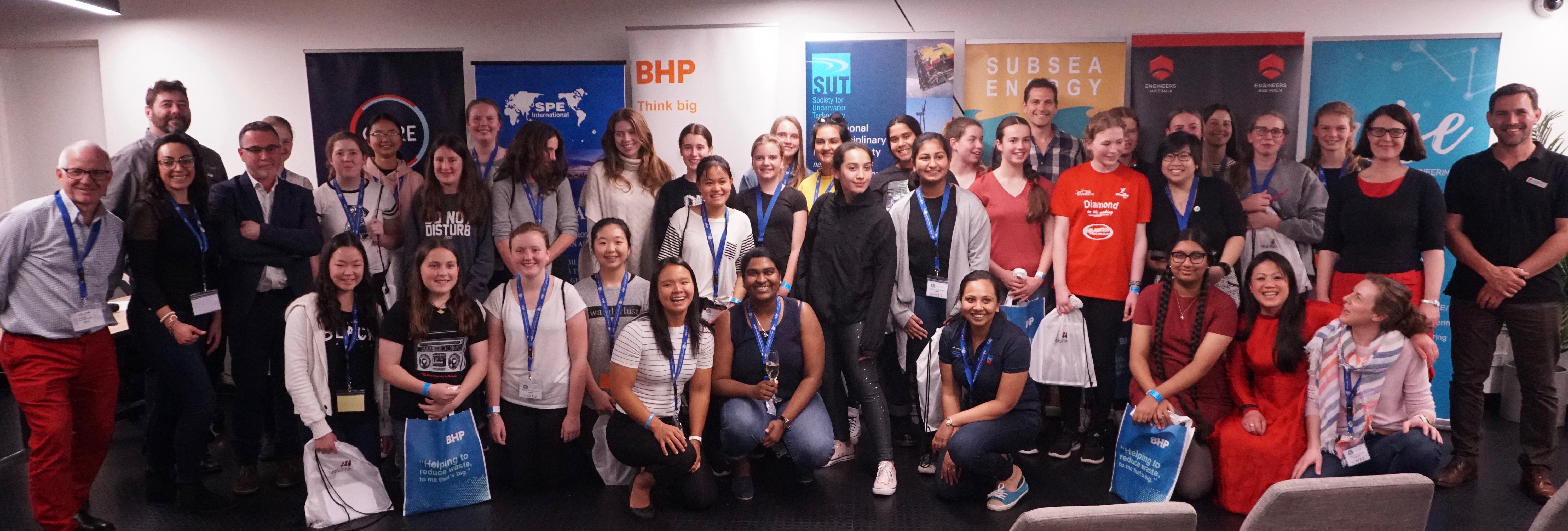
Women in Subsea Engineering – Establishing the Baseline
Recently WISE initiated a study in order to gain further insight into the status of women working in the subsea sector. Prepared by Professor Linley Lord, Dr. Melissa Marinelli and Ms Danielle Leotta the report aims to establish a gender profile with a particular focus on women in STEM (science, technology, engineering, maths) professions in order to identify barriers and which are limiting participation and develop strategies to address this.
In 2016, Australia’s Chief Scientist released the report Busting the Myths about Women in STEM (Prinsley, Beavis, & Clifford-Hordacre, 2016) highlighting the persistent lack of women in STEM professions and the need for ongoing support and intervention to increase their workforce participation in these fields. Further research (Catalyst, 2016, Lord, Eastham, Jefferson & Wardale, 2014, The Chamber of Minerals and Energy of Western Australia, 2015, 2017) indicates that women continue to be underrepresented in the Australian resources industry, including the oil and gas extraction sector.
So, what does ‘Women in Subsea Engineering – Establishing the Baseline’ tell us?
A key finding is the lack of data specifically related to women in the subsea sector. There is information available about women in resources, however this appears to be collected too infrequently to enable accurate measurement of industry-led initiatives.
Despite this lack of data, the focus groups revealed women see the sector as exciting, challenging and innovative, offering diverse career opportunities. Visibility of the sector continues to require improvement.
Many issues faced by women in the subsea sector are common to those in related industries, for example difficulty establishing credibility, difficulty accessing formal and informal networks and mentorship opportunities, challenges utilising flexible working arrangements, negative perceptions around women as mothers and a lack of understanding of the value of diversity within organisations.
Clearly, we need to continue to work on increasing the awareness of the subsea sector, especially to university students. We also need to consider attracting women to the industry later in their careers. This might include financial support for further training, flexible work arrangements, and educating managers on the value of diverse teams.
We hope you’ll join us to hear the full findings of ‘Women in Subsea Engineering – Establishing the Baseline’ presented by Professor Linley Lord on Wednesday, September 12 at Curtin St Georges Terrace.
Please register to the event here as places are limited.